 Home
HomeWhich Engine Oil Is Best for Your Bike?
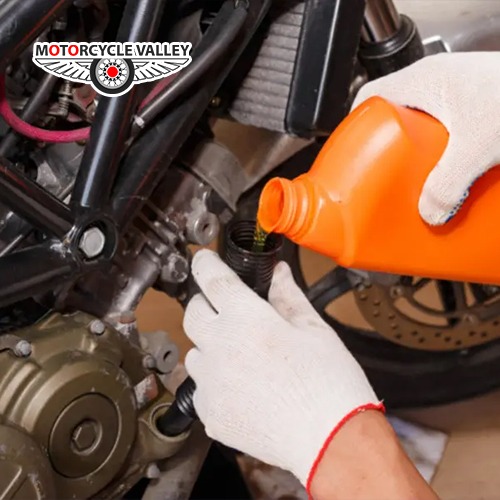
A bike’s performance largely depends on the engine oil you use.
Generally, engine oils are of three types — Mineral, Semi-Synthetic, and Full Synthetic.
Let’s take a look at their features, uses, and which one suits your bike best.
Mineral Engine Oil
Mineral oil is the most common type of engine oil, made directly from natural crude oil.
It’s thicker and works well in old or low-powered engines.
However, it tends to heat up faster, so performance can drop during long rides.
Advantages:
Comparatively cheaper than other types of engine oil.
Works very well in older engines.
Ideal for new engines that require frequent oil changes in the early stages.
Disadvantages:
Gets dirty faster than other oils.
Needs frequent replacement, so not suitable for long rides.
Not ideal for high-performance or sports bikes.
Oil Change:
For better performance, change it every 900–1,000 km.
-1764842321.jpeg)
Semi-Synthetic Engine Oil
This type of oil is a mix of Mineral and Full Synthetic oil, usually around 70% mineral + 30% synthetic.
Because of the synthetic blend, it performs better than regular mineral oil.
It can handle high temperatures, reduces friction, and helps the engine run smoothly.
Advantages:
More durable than mineral oil, so it lasts longer before needing a change.
Though slightly more expensive, you can ride more kilometers with it.
Perfect for mid-range commuter bikes.
Disadvantages:
Doesn’t perform as well as full synthetic oil.
The engine can get a bit hotter during long rides.
Oil Change:
For the best results, change every 1,500–2,000 km.
Full Synthetic Engine Oil
Full synthetic oil is completely chemical-based and premium quality.
It keeps the engine cool, minimizes friction, and provides consistent performance in all weather conditions.
That’s why it’s the best choice for high-performance bikes and long tours.
Advantages:
Makes the engine run smoother, which can improve mileage.
Reduces friction, helping extend engine life.
Lasts much longer than mineral or semi-synthetic oil, reducing the hassle of frequent oil changes.
Disadvantages:
More expensive than other types.
May cause oil leaks in old engines, so not recommended for them.
Oil Change:
Every 2,500–3,000 km, and in some cases, up to 4,000 km.
Some Useful Tips:
For new bikes (0–3,000 km), use mineral oil first.
After that, you can gradually switch to semi or full synthetic oil.
Always use branded engine oil for reliability and performance.
Follow your bike’s manual-recommended grade such as 10W-40, 20W-50 when choosing oil.
Oil News

 2026-01-05
This campaign includes 15 free point check-ups, as well as 10% discount on spare parts and Yamalube. There will also be a separate...
English Bangla 2025-12-27
Yamalube Engine Oil is a premium engine lubricant specially designed by Yamaha, which is formulated to meet the specific needs of ...
English Bangla 2025-11-30
A biker, particularly one who rides a Yamaha motorcycle, should purchase Yamalube engine oil because it is a "liquid engine comp...
English Bangla 2025-10-20
Yamalube is a renowned engine oil brand in Bangladesh, most of whose products are used in premium quality bike models, one of th...
English Bangla 2025-09-30
Yamalube is one of the best engine oil brands in Bangladesh, every product in its product list is at the top of the preference...
English Bangla
2025-12-27